The efficiency rating printed on a wood stove specification sheet and the actual heat delivered to a room in January in Sudbury are related but not the same number. Understanding the gap between laboratory efficiency and real-world performance requires looking at fuel moisture, combustion air management, and how BTU content varies by species.

How Efficiency Is Measured: HHV vs. LHV
Wood stove efficiency in Canada is expressed as either Higher Heating Value (HHV) or Lower Heating Value (LHV) efficiency. The distinction matters because they produce different numbers from the same appliance performance:
- HHV (Higher Heating Value): assumes all moisture in combustion gases condenses and releases latent heat. This is the measure used in CSA B415.1 testing. An appliance rated at 72% HHV efficiency captures 72% of the total energy in the wood including the latent heat of water vapour.
- LHV (Lower Heating Value): excludes latent heat from water condensation — the approach used in European standards (EN 13240). The same appliance might show 78–80% LHV efficiency against 72% HHV efficiency.
When comparing appliances from different markets, confirm which efficiency basis the number uses. A European stove rated at 80% LHV and a Canadian stove rated at 72% HHV may be delivering essentially identical heat output per kilogram of dry wood burned.
CSA B415.1 uses HHV as the efficiency basis. All wood stoves sold in Canada with Canadian certification ratings are measured on this basis. European ratings on EN standards use LHV — approximately 6–8 percentage points higher for equivalent performance.
Wood Species: BTU Content by Common Canadian Species
Firewood is sold by the cord (128 cubic feet of stacked wood) or face cord across Canada, but cord-for-cord comparison between species is misleading without adjusting for density. The relevant figure is million BTUs (MMBtu) per cord of air-dried wood at approximately 20% moisture content:
High-Density Hardwoods (25–30 MMBtu/cord)
- Black locust: 26.8 MMBtu — uncommon in Canada but present in southern Ontario; extremely dense
- Ironwood (Hop-hornbeam): 27.1 MMBtu — very hard to split but exceptional heat output; found in mixed hardwood forests in Ontario and Quebec
- Sugar maple: 25.5 MMBtu — the standard reference species in Ontario and Quebec; splits cleanly, burns hot, produces minimal ash
- Yellow birch: 23.6 MMBtu — slightly lower than sugar maple but seasons faster; common across eastern Canada
Medium-Density Hardwoods (18–24 MMBtu/cord)
- White ash: 23.6 MMBtu — can be burned before fully seasoned at higher moisture than most species; still not recommended above 25% MC
- Red oak: 24.6 MMBtu — dense and high-output; requires 18–24 months to season properly due to its density
- White birch: 20.3 MMBtu — widely available across the boreal zone; good starter wood due to resin content
- Trembling aspen: 18.2 MMBtu — low density but extremely fast-seasoning; burns cleanly when dry; common in the Prairie provinces
Softwoods (13–18 MMBtu/cord)
- Black spruce: 15.9 MMBtu — the primary available species in much of northern Ontario, Manitoba, and Saskatchewan; acceptable fuel when properly seasoned despite lower BTU
- Jack pine: 17.1 MMBtu — higher resin content than spruce; requires attentive air management to avoid creosote buildup
- Douglas fir (BC): 20.7 MMBtu — the softwood exception; nearly as energy-dense as some hardwoods; widely used in British Columbia
Moisture Content: The Single Largest Variable
A cord of green (freshly cut) sugar maple at 50% moisture content contains roughly 16 MMBtu of usable heat — nearly 40% less than the same species properly dried to 20% moisture. The water in green wood must be vaporized before combustion can proceed efficiently, consuming energy and producing steam that cools the firebox and condenses as creosote in the chimney.
The moisture threshold for clean combustion in a certified stove is 20% moisture content (MC) or below. Most stove manufacturers specify this in the owner's manual. How to reach 20% MC:
- Split wood to final firewood dimensions before stacking — round logs dry slowly from the ends only
- Stack off the ground with space between rows for airflow
- Cover only the top of the stack — covering sides traps humidity and slows drying
- Allow 12–18 months for hardwood species in most of Canada; 8–12 months for trembling aspen and white birch; 6–8 months for softwoods in dry western climates
A moisture meter for firewood costs $20–$40 at most hardware stores across Canada. Measuring before loading a stove takes 30 seconds and provides more useful information about the day's burn than any other single variable. Readings should be taken from a freshly split face — surface readings on the bark side will always show artificially low numbers.
Catalytic vs. Non-Catalytic Combustion
Modern EPA/CSA-certified wood stoves use one of two secondary combustion systems to extract additional energy from smoke gases before they exit through the connector pipe:
Catalytic Combustors
A ceramic or metal honeycomb coated with a platinum/palladium catalyst lowers the ignition temperature of unburned gases from approximately 540°C to 260°C. At operating temperature, the combustor glows and burns gases that would otherwise exit as smoke and creosote. Catalytic stoves typically show higher peak efficiency ratings (75–80% HHV) and produce very low particulate emissions.
The combustor requires replacement every 3–6 seasons depending on use, fuel quality, and whether the stove has been overloaded with wet wood. A cracked combustor — visible when cold — eliminates the secondary combustion benefit while the stove appears to operate normally. Annual inspection of the combustor is part of standard maintenance for catalytic stoves.
Non-Catalytic (Secondary Air Tube) Systems
Secondary air is introduced above the primary firebox through a manifold of preheated tubes. The hot air ignites smoke gases at firebox temperatures above approximately 480°C. Non-catalytic systems have no component requiring periodic replacement, making long-term maintenance simpler. Efficiency ratings typically fall in the 68–75% HHV range for quality appliances in this category.
Non-catalytic stoves are more tolerant of operator variation — they do not require the warm-up sequence needed to bring a catalytic combustor to operating temperature. For intermittent or occasional users who do not maintain consistent fire management, non-catalytic designs tend to perform more predictably in practice.
Thermal Mass and Heat Storage
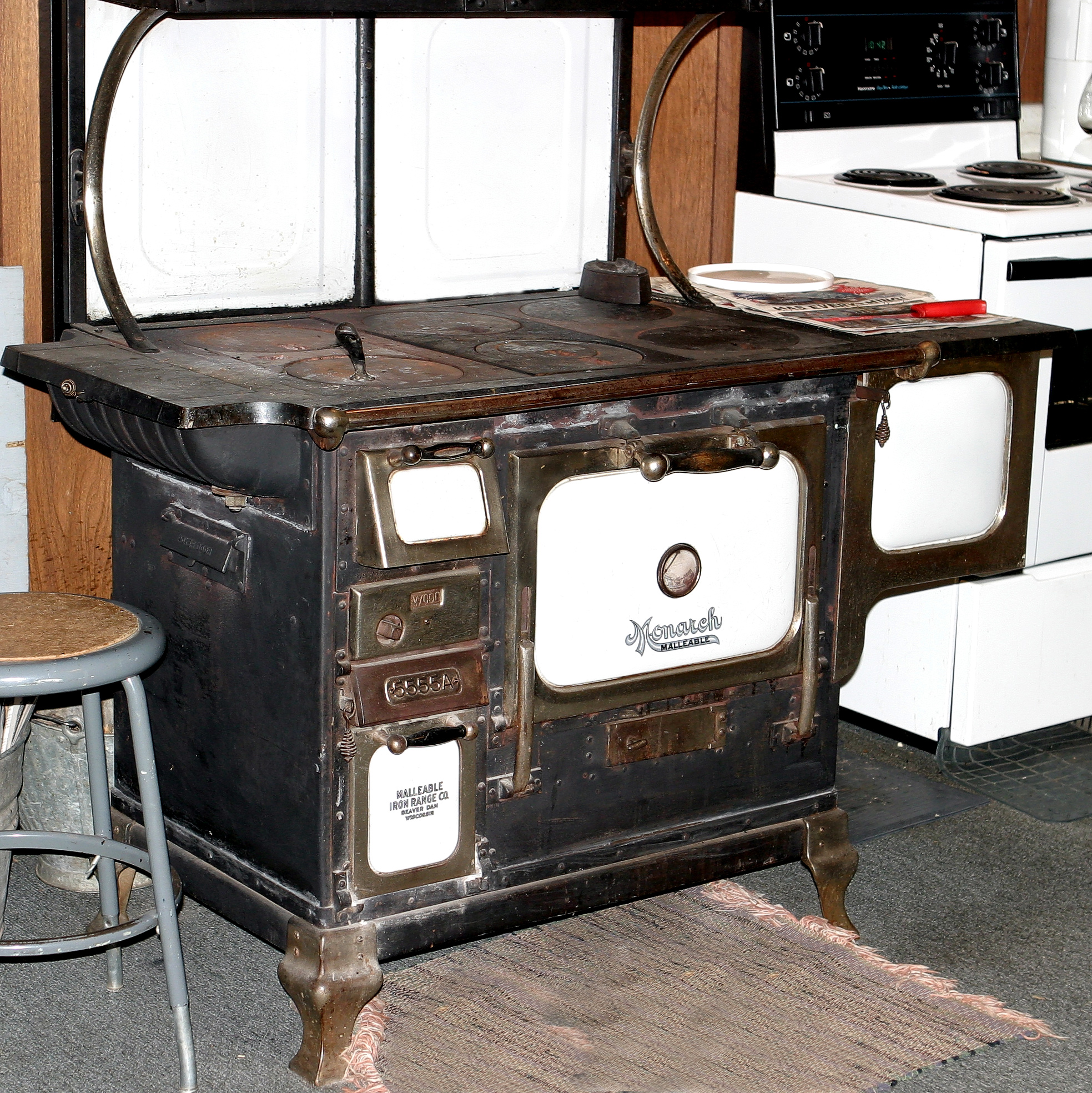
A cast iron stove weighing 250 kg behaves differently from a thin-gauge steel stove at 80 kg despite identical certified efficiency ratings. Mass stores heat and radiates it slowly after the fire dies down — a relevant characteristic in Canada's shoulder seasons when maintaining comfortable temperatures overnight without loading the stove at 3 AM is the practical goal.
Soapstone stoves, masonry heaters, and heavy cast iron appliances excel at this. Masonry heaters — fired intensively for 1–2 hours then allowed to radiate for 12–24 hours — are common in Scandinavian practice and increasingly available in Canada from specialist manufacturers. They operate at lower overall firebox temperatures with shorter, hotter fires rather than the slow, smouldering burns that create creosote in standard stoves.
Pellet Stoves: A Different Category
Pellet stoves are wood-burning appliances that use manufactured compressed wood pellets rather than cordwood. They fall under different certification standards (CSA B366.1) and require electrical power for the auger, combustion fan, and controls. Efficiency ratings for pellet stoves are typically quoted on an LHV basis at 75–85%, partly because pellets are manufactured to a consistent 5–8% moisture content, eliminating the fuel-quality variable that affects cordwood stove performance in the field.
Pellet stoves cannot be operated during power outages — a relevant consideration in rural Canada where extended outages coincide with the coldest weather. Some models include battery backup for the auger and fans, providing limited continued operation. Clearance requirements for pellet stoves differ from certified wood stoves and must be read from the specific appliance label.
Further Reading
Natural Resources Canada publishes the EnerGuide wood heating reference, which includes certified appliance efficiency listings. The WETT Inc. website covers fuel standards and maintenance requirements for certified wood heating systems.